Mellor St Mary CE Primary School
RE National Curriculum
Our school has been involved with an exciting project within the R.E. curriculum across England, to link our existing Questful R.E. syllabus with the changing religious landscape in our country and to consider opportunities to explore social justice.
Mrs. Marshall has been a member of a working party, led by Lisa Fenton, the leader of R.E. within the Blackburn Diocesen Board of Education. Working as a team, we have explored and implemented an approach to R.E. which acknowledges our multi-faith society as the basis for what we learn in R.E. We aim to demonstrate that everyone counts in God's world. We look for similarities in the values, concepts and cultures of all world faiths. Our Christian ethos is at the centre of this approach, as it is because we are Christians that we so want to seek to understand others. We demonstrate our Christian love through responding through love to all people.
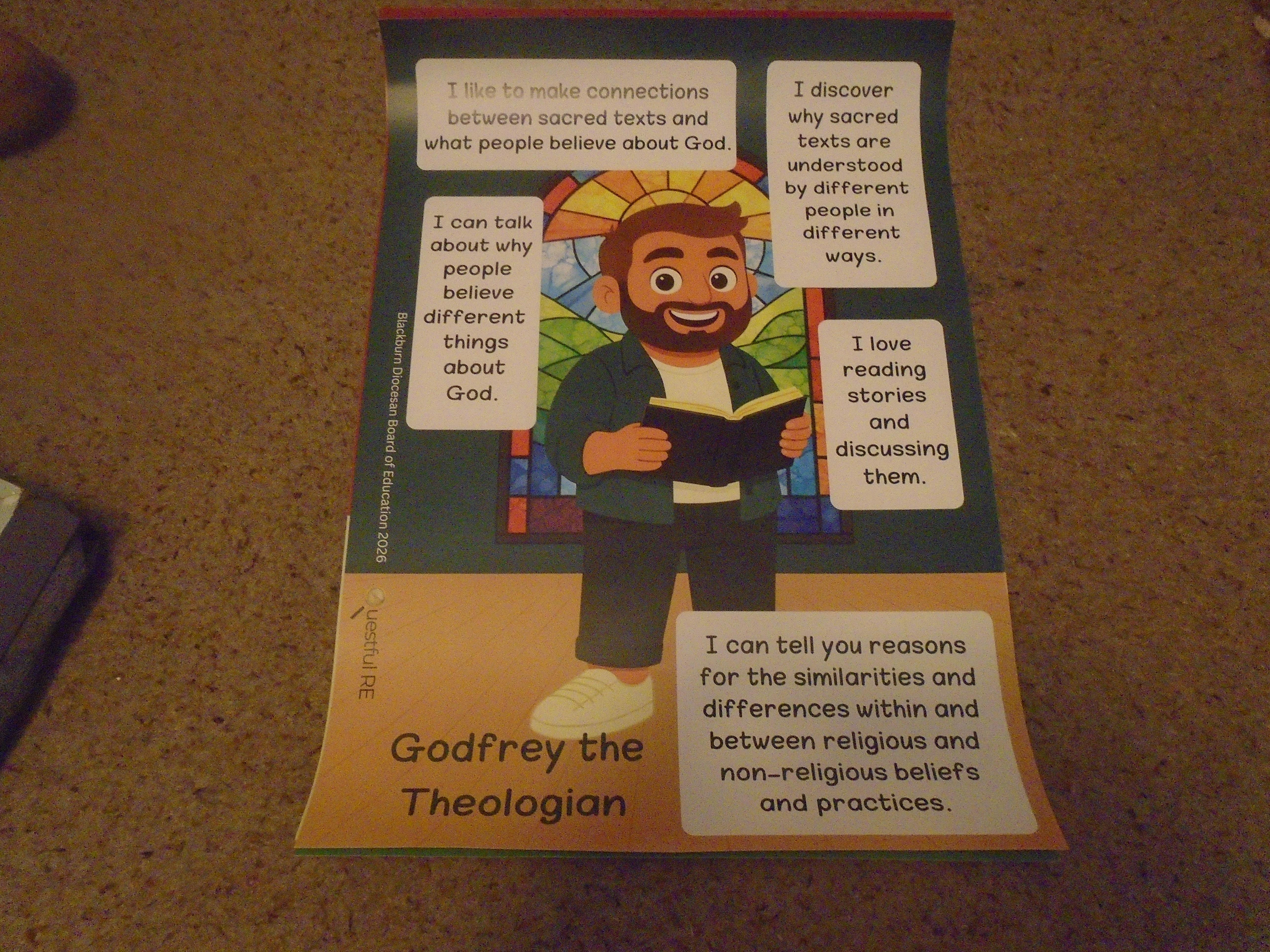
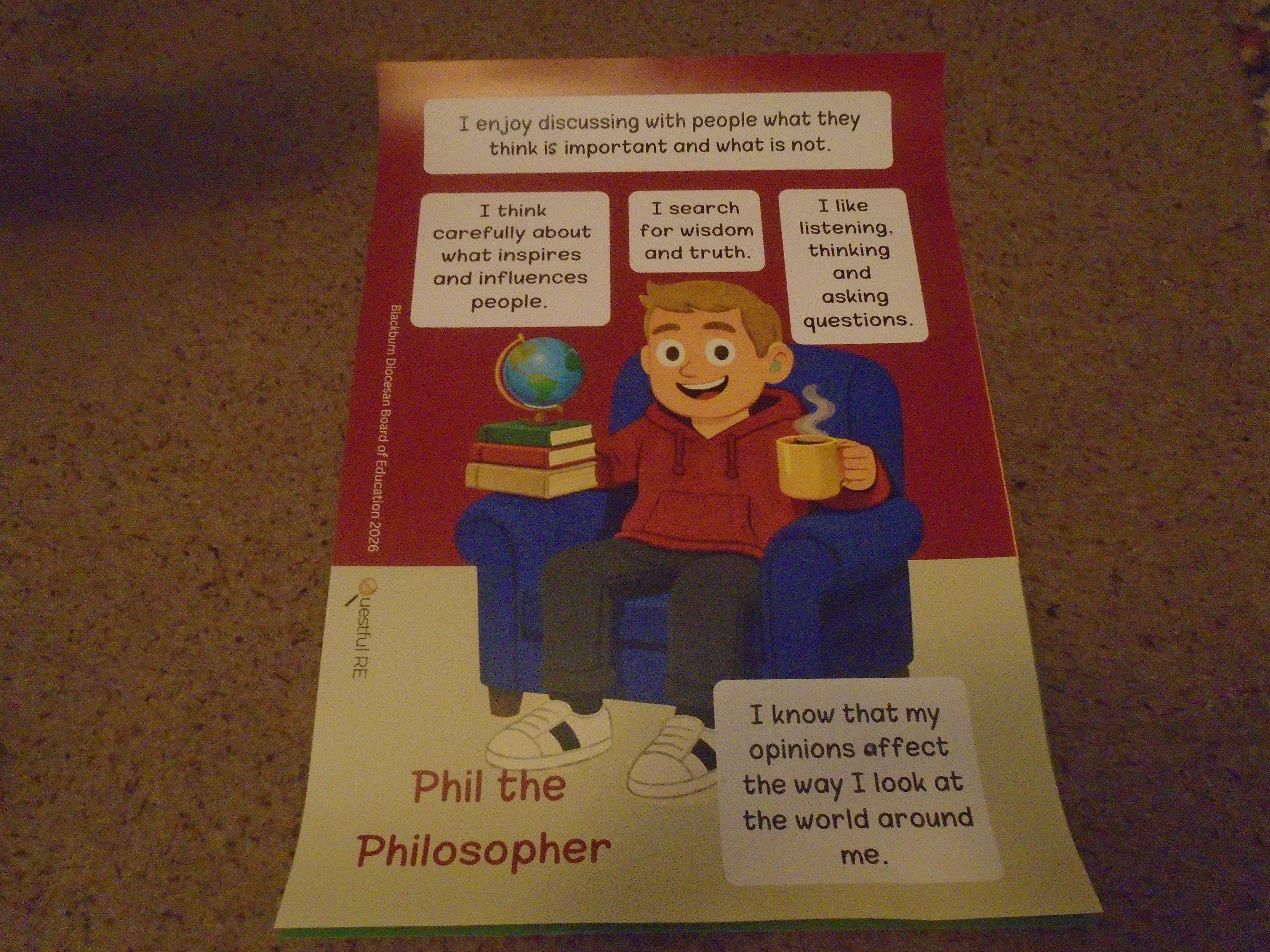
Part of the development of our R.E. curriculum is to add to the academic aspects of this subject by considering different perspectives - theology, combined with philosophy and an awareness of the work of human social scientists in studying the cultural impact of world faiths on the way that people live.
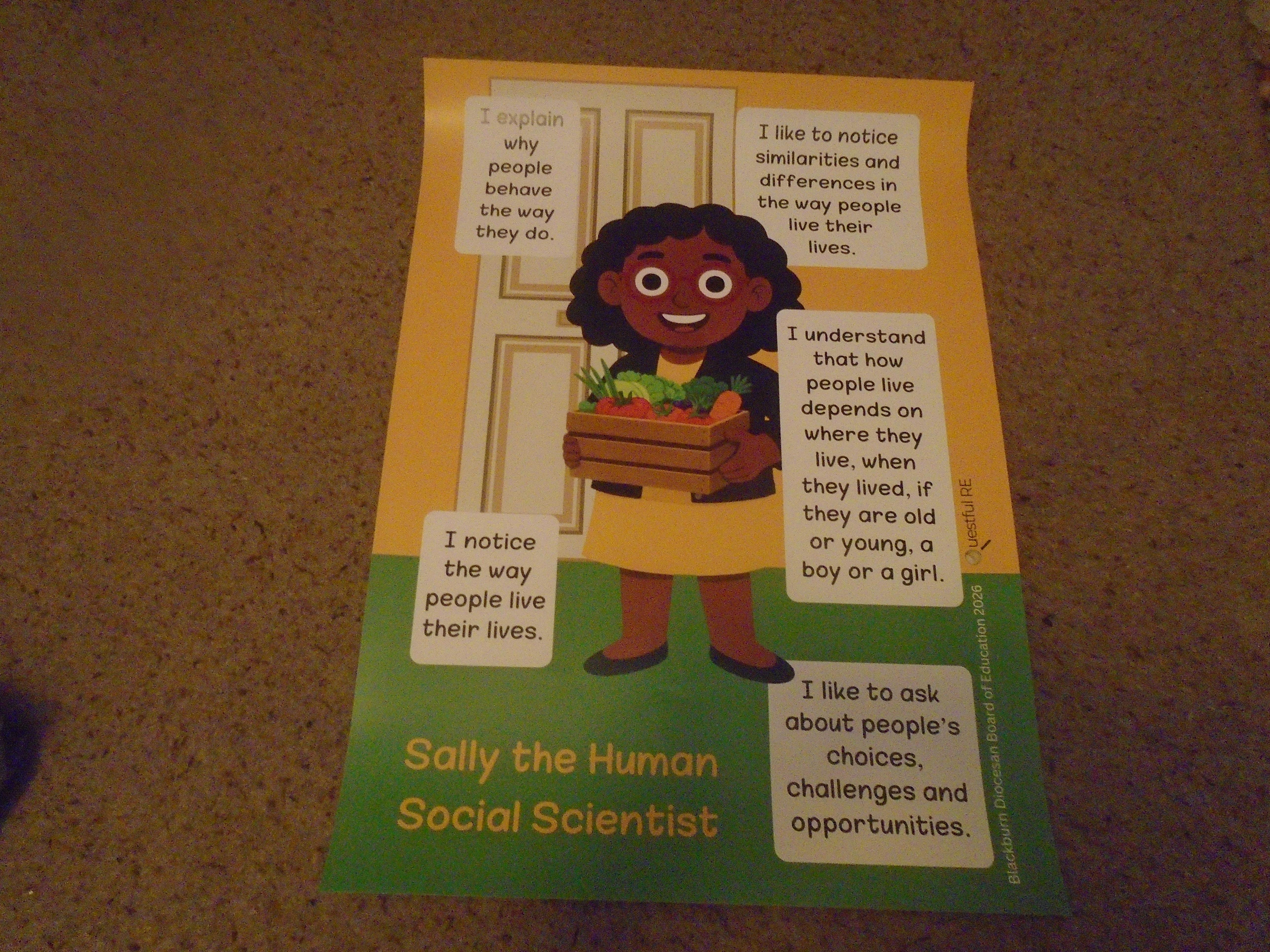
We have invoked the help of three characters to help us understand this perspective-led R.E.: Godfrey the theologian, Phil the philosopher and Sally the Human Social Scientist.
Taken from National Curriculum - updated 2019
The importance of RE.
Religion and beliefs inform our values and are reflected in what we say and how we behave.
RE is an important subject in itself, developing an individual’s knowledge and understanding of the religions and beliefs which form part of contemporary society.
Religious education provokes challenging questions about the ultimate meaning and purpose of life, beliefs about God, the self and the nature of reality, issues of right and wrong, and what it means to be human.
It can develop pupils’ knowledge and understanding of Christianity, of other principal religions, other religious traditions and worldviews that offer answers to questions such as these.
RE also contributes to pupils’ personal development and well-being and to community cohesion by promoting mutual respect and tolerance in a diverse society. RE makes important contributions to other parts of the school curriculum such as citizenship, personal, social, health and economic education (PSHE education), the humanities, education for sustainable development and others. It offers opportunities for personal reflection and spiritual development, deepening the understanding of the significance of religion in the lives of others – individually, communally and cross-culturally.
Spiritual, moral, social and cultural development Section 78 (1) of the 2002 Education Act states that all pupils should follow a balanced and broadly based curriculum which ‘promotes the spiritual, moral, cultural, social, mental and physical development of pupils and of society, and prepares pupils for the opportunities, responsibilities and experiences of later life’.